
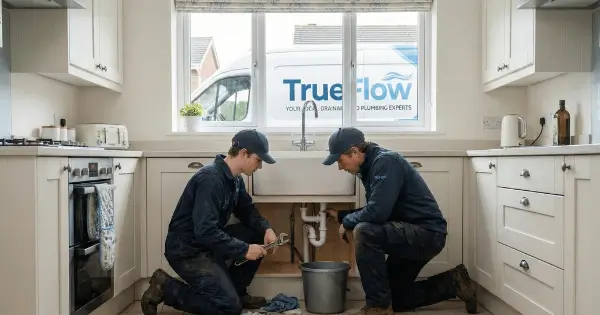
Why is my sink draining slowly? A slow draining sink is typically caused by a partial blockage from hair, soap scum, grease, or debris buildup in the trap or drainpipe. In 80% of cases, the blockage is within 30cm of the plughole and can be cleared with basic DIY methods. Persistent slow drainage may indicate a deeper issue requiring professional attention.
If your sink takes forever to empty, you’re not alone: it’s one of the most common plumbing complaints in UK homes. The good news? Most slow-draining sinks can be fixed in under 30 minutes without calling anyone.
Here are the 5 most common causes and exactly how to fix each one.
5 Causes of a Slow Draining Sink
| Cause | Location | DIY Fixable? | Cost to Fix |
|---|---|---|---|
| Hair and soap buildup | P-trap/plughole | Yes | £0-£10 |
| Grease and fat deposits | Drainpipe | Usually | £0-£20 |
| Foreign objects | P-trap | Yes | £0 |
| Vent pipe blockage | Roof vent | No | £80-£150 |
| Main drain issue | External | No | £100-£300 |
1. Hair and Soap Scum Buildup
Hair is the number one culprit behind slow bathroom sinks. Each strand catches on the drain mechanism, creating a net that traps soap, toothpaste, and debris. Over weeks, this builds into a dense plug.
UK water companies deal with roughly 300,000 sewer blockages a year, according to Water UK, and inside the home hair is one of the main culprits in bathroom drains.
How to Fix It
- Remove the plug mechanism: Unscrew or pull out the pop-up stopper
- Clear visible debris: Use needle-nose pliers or tweezers to pull out hair
- Use a drain snake: Feed a flexible snake 30-60cm into the pipe and rotate
- Flush with hot water: Run hot (not boiling) water for 2 minutes
- Replace the stopper: Clean it before reinstalling
Time required: 10-20 minutes
Prevention Tips
- Install a drain guard or hair catcher (£3-£8 from any hardware store)
- Clean visible hair from the plughole weekly
- Flush with hot water after each use
2. Grease and Fat Deposits
Kitchen sinks suffer from fats, oils, and grease (FOG) that coat pipe walls. Initially liquid, these substances solidify as they cool, narrowing the pipe diameter over time.
The Water Services Regulation Authority reports that fat blockages cost UK water companies over £100 million annually to clear from sewers. The same deposits accumulate in your home drains.
How to Fix It
- Boiling water method: Pour a full kettle of boiling water directly down the drain
- Washing-up liquid treatment: Squirt a generous amount of dish soap, then flush with boiling water
- Baking soda and vinegar: Pour 100g baking soda followed by 100ml white vinegar, wait 15 minutes, then flush with hot water
- Enzyme cleaner: Use a biological drain maintainer for stubborn buildup
Time required: 5-15 minutes (plus waiting time for enzyme cleaners)
Prevention Tips
- Never pour cooking oil down the sink. Collect it in a container for disposal
- Wipe greasy pans with kitchen paper before washing
- Run hot water for 30 seconds after doing dishes
3. Foreign Objects Trapped in the P-Trap
The P-trap (the curved pipe under your sink) catches small objects that fall down the drain: rings, earrings, bottle caps, food debris. Over time, these create partial blockages.
How to Fix It
- Place a bucket under the P-trap: Catches water and debris
- Unscrew the slip nuts: Turn anticlockwise by hand or with pliers
- Remove and inspect the trap: Check for objects and buildup
- Clean thoroughly: Use a bottle brush and hot soapy water
- Reinstall: Hand-tighten the nuts, then a quarter turn with pliers
Time required: 15-25 minutes
A clump of hair bound up with soap in the P-trap is the most common thing engineers find behind a sink that won’t drain, and it’s one of the few drainage jobs that is genuinely quick to fix yourself before paying for a call-out.
Prevention Tips
- Use a sink strainer to catch debris
- Avoid rinsing food scraps down kitchen sinks
- Install a mesh guard over bathroom sink drains
4. Blocked Vent Pipe
Every drain system includes a vent pipe (usually exiting through your roof) that allows air into the system. When this vent blocks (often from leaves, bird nests, or debris), it creates negative pressure that slows drainage.
Signs of a vent blockage:
- Multiple drains slow simultaneously
- Gurgling sounds when water drains
- Foul odours from drains
- Toilet water level fluctuates
How to Fix It
Vent pipe blockages require roof access and aren’t suitable for DIY. The job involves:
- Safely accessing the roof
- Locating and clearing the vent opening
- Checking for damage to the vent cap
- Flushing the vent with water if needed
Professional cost: £80-£150
This is one situation where calling a professional makes sense. Working at height carries risks, and a drainage engineer can also check for other issues while on-site.
5. Main Drain Blockage
If multiple sinks (or other fixtures) drain slowly, the problem likely lies in your main drain rather than individual pipes. Tree roots, ground movement, and accumulated debris can restrict flow in external drains.
Signs pointing to a main drain issue:
- All sinks drain slowly
- Toilets don’t flush properly
- Gurgling from floor drains
- Foul smells outside near drain covers
- Water backing up in the lowest fixtures
How to Fix It
Main drain blockages require professional equipment:
- CCTV drain survey: Locates the exact blockage point
- High-pressure jetting: Clears roots and stubborn debris
- Drain rodding: For accessible blockages
It’s worth being sure of the cause before spending more on DIY. A kitchen sink that resists every home remedy can turn out to have a collapsed drain section several metres from the house, something only a CCTV camera will reveal.
Professional cost: £100-£300 depending on severity
For suspected main drain issues, get a professional assessment before spending money on DIY solutions that won’t work.
Quick Comparison: DIY vs Professional
| Problem | DIY Success Rate | DIY Cost | Professional Cost |
|---|---|---|---|
| Hair/soap buildup | 90% | £0-£10 | £80-£100 |
| Grease deposits | 75% | £0-£20 | £80-£120 |
| P-trap debris | 95% | £0 | £80-£100 |
| Vent pipe blockage | 10% | N/A | £80-£150 |
| Main drain issue | 5% | N/A | £100-£300 |
When to Call a Professional
Try DIY methods first for isolated slow sinks. Call a professional if:
- DIY methods haven’t worked after two attempts
- Multiple fixtures drain slowly
- You notice foul smells from drains
- Water backs up when you use other fixtures
- The slow drainage keeps returning within weeks
Recurring blockages often indicate a deeper problem (cracked pipes, tree root intrusion, or incorrect pipe gradients) that DIY methods can’t solve.
How to Prevent Slow Draining Sinks
Prevention costs nothing and saves both hassle and money. Follow these habits:
- Install drain guards: Catch hair and debris before they enter pipes
- Weekly hot water flush: Run hot water for 2 minutes to clear grease
- Monthly maintenance clean: Baking soda and vinegar keeps pipes fresh
- Avoid problem substances: No grease, coffee grounds, or excessive soap
- Act early: Fix slow drains before they become complete blockages
Slow drainage is your early warning system. Ignored, it usually progresses to a complete blockage, and what could have been a five-minute clean becomes a professional call-out.
FAQ
Can I use chemical drain unblockers on a slow sink?
Chemical unblockers (like caustic soda) can work on minor organic blockages but have drawbacks. They’re harsh on pipes, especially older systems, and dangerous to handle. The Health and Safety Executive classifies caustic soda as corrosive. For slow drains, try mechanical methods (plunger, snake) or enzyme cleaners first. They’re safer and often more effective.
Why does my sink drain slowly but the others are fine?
A single slow sink indicates a localised blockage, usually in the P-trap or the drainpipe immediately below. If multiple sinks drain slowly, suspect a shared drain line or vent pipe issue. Single slow sinks are almost always DIY-fixable with the methods above.
How often should I clean my sink drains?
Monthly maintenance prevents most blockages. Pour a kettle of boiling water down each drain weekly, and do a baking soda/vinegar treatment monthly. Bathroom drains need more attention than kitchen sinks if you have long hair. Consider weekly hair removal from the plughole.
Is a slow draining sink an emergency?
No. A slow drain is inconvenient but not urgent. You have time to try DIY fixes and book a standard appointment if needed. Emergency rates (typically 50-100% extra) aren’t justified for slow drainage. The exception: if sewage is backing up or you smell gas, call immediately.
Could a slow drain damage my pipes?
Standing water from slow drains won’t damage pipes directly. However, using chemical unblockers repeatedly can corrode older pipework. More importantly, ignoring a slow drain often leads to a complete blockage, and the pressure from backed-up water can stress pipe joints. Fix slow drains promptly to avoid bigger problems.
Need Help With a Slow Draining Sink?
If you’ve tried the DIY methods and your sink still drains slowly, there may be a deeper blockage we can locate and clear. Our drainage engineers carry full jetting equipment and CCTV cameras to diagnose problems other methods miss.
We serve Bracknell, Wokingham, Reading, Windsor, and surrounding areas in Berkshire. All work guaranteed for 6 months, fixed quotes before any work, and same-day appointments usually available.
Call 0808 175 7440 for a free, no-obligation assessment.