
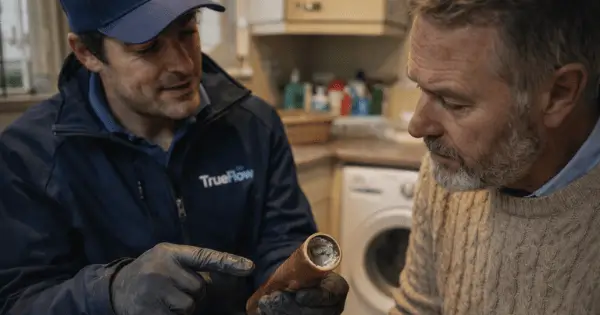
Does Bracknell have hard water? Yes: Bracknell has hard water, with readings around 288 mg/L of calcium carbonate on UK postcode hardness databases. South East Water, which supplies the town’s drinking water, classes the area as hard, and you can check your exact postcode on their hardness checker. This is significantly above the 200 mg/L threshold for “hard” water. Over time, hard water causes limescale buildup that damages pipes, reduces boiler efficiency, and blocks drains.
If you live in Bracknell, Binfield, Crowthorne, or the surrounding areas, your plumbing is under constant attack from mineral deposits. This guide explains what hard water does to your home and how to protect your plumbing system.
What Makes Bracknell’s Water So Hard?
Bracknell’s water supply comes from underground chalk aquifers in the Thames Valley. As rainwater filters through chalk and limestone bedrock, it absorbs calcium and magnesium minerals. These dissolved minerals make the water “hard.”
| Area | Water Hardness (mg/L) | Classification |
|---|---|---|
| Bracknell | ~288 | Hard |
| Binfield | ~288 | Hard |
| Crowthorne | ~318 | Very hard |
| Wokingham | ~297 | Hard |
| Reading | 290-330 | Hard to very hard |
For comparison, soft water areas like Cornwall measure below 100 mg/L. Bracknell’s water is three times harder, and that difference shows in your plumbing.
How Hard Water Damages Your Plumbing
Limescale Buildup in Pipes
Every litre of Bracknell tap water contains roughly 0.3 grams of dissolved minerals. When water evaporates or heats up, these minerals solidite into limescale: the white, chalky deposits you see on taps and showerheads.
Inside your pipes, limescale accumulates gradually:
- Year 1-3: Thin coating forms on pipe walls
- Year 5-10: Buildup narrows pipe diameter by 10-20%
- Year 10-20: Severe restriction causing reduced flow and pressure
- Year 20+: Pipes may need replacement
According to the Chartered Institute of Plumbing and Heating Engineering (CIPHE), limescale is one of the leading causes of plumbing failures in hard water areas. Drainage engineers frequently encounter properties where decades of mineral buildup have restricted flow to a trickle.
Reduced Boiler Efficiency
Your boiler’s heat exchanger is particularly vulnerable. Limescale acts as an insulator: just 1.5mm of buildup reduces heat transfer efficiency by 12%, according to research from the Energy Saving Trust.
In hard water homes like Bracknell’s, the typical effects are:
- Higher energy bills (£50-£150 extra annually)
- Longer wait times for hot water
- Banging or kettling noises from boilers
- Premature boiler failure (5-7 years instead of 10-15)
Blocked Drains and Slow Drainage
Hard water affects your drainage system too. Limescale combines with soap residue to form a stubborn deposit called “soap scum” that clings to pipe walls. In bathroom drains, this mixes with hair to create particularly tough blockages.
Limescale acts like a binder: it cements hair, soap and debris together, which is why blockages in hard water areas tend to be more stubborn and respond less well to DIY methods.
Common hard water drain issues include:
- Slow draining sinks that worsen over time
- Frequent toilet blockages despite proper use
- Recurring drain smells from buildup
- Shower drains that need clearing every few months
Damage to Appliances
Any appliance that heats water suffers in hard water areas:
| Appliance | Expected Lifespan (Soft Water) | Expected Lifespan (Bracknell) |
|---|---|---|
| Washing machine | 11 years | 7-9 years |
| Dishwasher | 10 years | 6-8 years |
| Electric kettle | 4-5 years | 2-3 years |
| Water heater | 12-15 years | 8-10 years |
| Coffee machine | 5-7 years | 3-4 years |
The mineral deposits coat heating elements, forcing appliances to work harder and eventually causing burnout.
Signs of Hard Water Problems in Your Home
Watch for these indicators that hard water is affecting your plumbing:
- White crusty deposits on taps, showerheads, and around plug holes
- Reduced water pressure that worsens gradually over months
- Water takes longer to heat than it used to
- Spots and streaks on glasses and dishes after washing
- Soap doesn’t lather properly: you need more product
- Dry skin and dull hair after showering
- Drains slow down despite regular cleaning
- Boiler makes unusual noises (banging, whistling, or rumbling)
If you notice three or more of these signs, hard water is already causing damage that will worsen without intervention.
Solutions for Hard Water in Bracknell
1. Water Softeners (Whole-House Protection)
A water softener removes calcium and magnesium through ion exchange, replacing them with sodium. This protects your entire plumbing system.
Pros:
- Prevents all future limescale buildup
- Extends appliance lifespan by 30-50%
- Reduces soap and detergent usage by 50%
- Improves skin and hair condition
Cons:
- Installation cost: £1,500-£3,000
- Ongoing salt costs: £60-£120 per year
- Requires space (typically under kitchen sink or in garage)
- Not suitable for drinking if you’re on a low-sodium diet
For Bracknell homes, a quality water softener typically pays for itself within 5-7 years through reduced appliance replacement, lower energy bills, and savings on cleaning products.
2. Scale Inhibitors (Budget Alternative)
Electronic or magnetic scale inhibitors claim to alter mineral structure without removing hardness. They’re cheaper (£50-£200) but less effective. Independent testing shows mixed results.
Polyphosphate filters are more reliable. They add small amounts of polyphosphate that keeps minerals suspended in water rather than depositing on surfaces. Expect to pay £100-£300 for installation plus £30-£50 annually for replacement cartridges.
3. Regular Descaling
For appliances, regular descaling prevents buildup:
- Kettles and coffee machines: Monthly with citric acid or white vinegar
- Washing machines: Quarterly with machine cleaner
- Dishwashers: Monthly and keep salt reservoir topped up
- Showerheads: Soak in vinegar solution every 3-6 months
This won’t protect your pipes or boiler, but it extends appliance life significantly.
4. Professional Drain Maintenance
For your drainage system, periodic professional drain jetting removes limescale and soap scum buildup before it causes blockages. In hard water areas like Bracknell, we recommend annual jetting for homes without water softeners.
A CCTV drain survey can assess existing limescale buildup in your drains. This 30-minute inspection shows exactly where deposits have formed and how severe the narrowing has become.
Hard Water and Your Home’s Age
Bracknell’s housing stock varies significantly, and your home’s age affects how hard water impacts your plumbing:
1960s-1970s Properties (Bracknell New Town Era)
Many original Bracknell New Town properties still have galvanised steel or lead pipes. Hard water accelerates corrosion in these materials. If your home hasn’t been replumbed, you may have:
- Significant internal corrosion and rust
- Limescale mixed with corrosion debris
- Severely restricted water flow
- Potential lead contamination
We recommend a plumbing assessment for any pre-1980s Bracknell property that hasn’t been modernised.
1980s-2000s Properties
Copper pipework became standard during this period. Copper resists corrosion but still accumulates limescale. Properties of this age typically show moderate buildup that responds well to descaling treatments.
Post-2000 Properties
Modern plastic (PEX or PVC) pipework is common and resists limescale better than metal. However, the fittings, valves, and appliances still accumulate deposits. Newer doesn’t mean immune, just slower deterioration.
When to Call a Professional
Contact a plumber or drainage engineer if you experience:
- Sudden pressure drop across multiple fixtures
- No hot water or significantly reduced hot water
- Boiler breakdown or error codes related to flow
- Completely blocked drains that won’t clear with a plunger
- Recurring blockages in the same drain
- Discoloured water (brown or orange tints)
- Visible leaks around pipe joints
For drainage issues in Bracknell, our team carries high-pressure jetting equipment specifically effective at removing limescale blockages. A single jetting session clears years of mineral buildup.
FAQ
Is Bracknell water safe to drink?
Yes. Hard water is safe and may even provide beneficial minerals (calcium and magnesium). The hardness affects plumbing and appliances but poses no health risk. South East Water treats and tests the supply continuously to meet drinking water standards.
Do I need a water softener in Bracknell?
It depends on your priorities. Water softeners provide the most complete protection and are worthwhile if you’re experiencing appliance failures, high energy bills, or skin irritation. For those on a budget, regular descaling and occasional professional drain maintenance offer partial protection at lower cost.
How much does hard water cost Bracknell homeowners?
Studies suggest hard water costs UK households £200-£500 annually through increased energy bills, appliance replacement, extra cleaning products, and plumbing repairs. In hard water areas like Bracknell, costs trend toward the higher end.
Can hard water damage my drains?
Yes. Limescale narrows drain pipes over time, combining with soap residue and debris to cause stubborn blockages. This is why Bracknell properties often need drain clearing more frequently than homes in soft water areas.
How do I check my water hardness in Bracknell?
Use South East Water’s postcode checker for official readings. You can also buy water hardness test strips from hardware stores (£5-£10) for instant results.
Need Help With Plumbing or Drainage in Bracknell?
If hard water has caused blocked drains, reduced water pressure, or plumbing problems in your Bracknell home, we’re here to help. Our drainage engineers understand the specific challenges of hard water areas and carry specialist equipment to tackle limescale blockages.
Call 0808 175 7440 for fast, reliable service, available 24/7.