
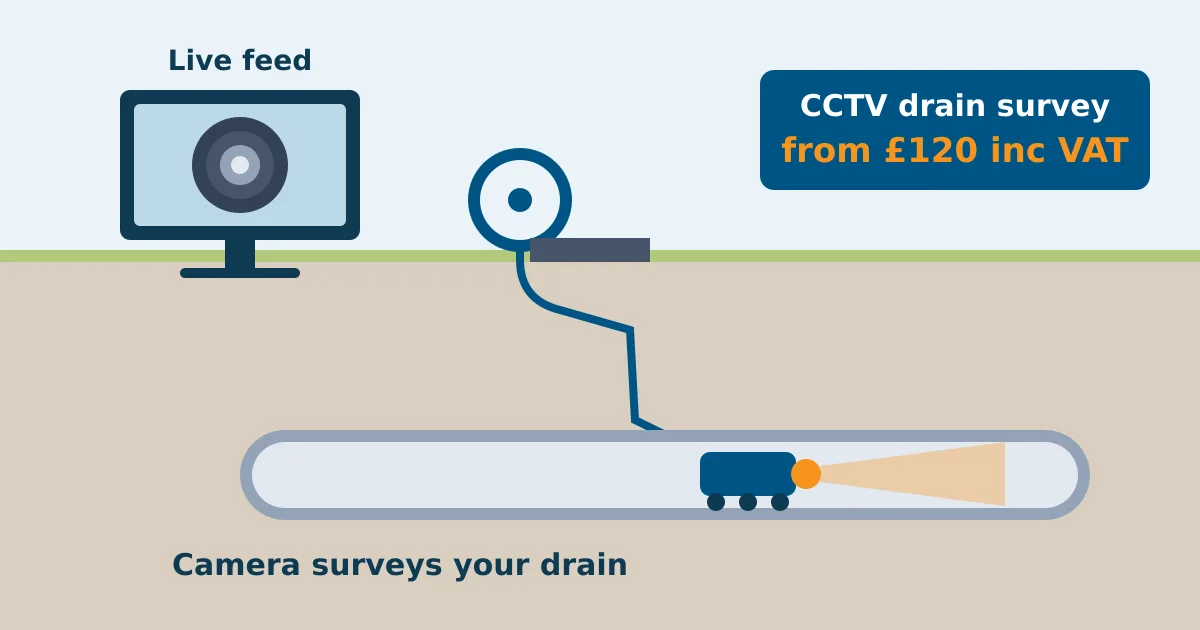
How much does a CCTV drain survey cost in 2026? A standard CCTV drain survey costs £120-£350 in the UK, depending on the length of pipework inspected and whether a written report is included. A basic camera inspection of a single run starts from around £120, while a full pre-purchase survey of every accessible drain on a property, with a recorded video and engineer’s report, typically costs £200-£350. Prices include VAT from reputable firms.
At TrueFlow, CCTV drain surveys start from £120 including VAT, and we agree the exact price with you before any camera goes into the pipe.
Need a survey in Berkshire? TrueFlow runs CCTV drain surveys from £120 inc VAT across Bracknell, Reading, Wokingham and the surrounding towns, with recorded footage you keep. Call 0808 175 7440 or book online.
CCTV Drain Survey Prices by Scenario
| Scenario | Typical UK range (inc VAT) | TrueFlow |
|---|---|---|
| Recurring blockage investigation (one or two runs) | £120-£200 | From £120 |
| Pre-purchase homebuyer survey, full written report | £200-£350 | From £120, priced per property |
| Insurance claim survey with report | £150-£300 | From £120 |
| Build-over survey for the water company | £150-£300 | From £120 |
| Jetting first, then survey (dirty or part-blocked drain) | survey plus £100-£150 cleaning | From £220 combined |
| Larger properties and commercial sites | £350-£450+ | Quoted per site |
The market figures are national cost-guide ranges; TrueFlow’s prices are from-rates, with the exact figure agreed before the camera goes in.
What You’re Actually Paying For
A CCTV drain survey sends a waterproof camera through your drains to show, rather than guess, what is happening underground. The cost covers more than the camera time:
- The inspection itself. An engineer feeds a camera through each accessible run, watching a live feed and recording it.
- Locating equipment. A sonde transmitter on the camera head lets the engineer trace the exact line and depth of the pipe from the surface, which matters if repairs are ever needed.
- The report. For homebuyer and insurance work you should receive a written report with footage, defect locations, pipe material and sizes, and a recommendation. If a firm’s price seems low, check whether a report is included at all.
- Cleaning first, if needed. A camera cannot see through standing water or grease. If the drain is partially blocked, it may need jetting before the survey; combined jetting-and-survey visits (from £220 with us) cost less than booking the two separately.
What Moves a Survey Quote Up or Down
Two surveys at the same postcode can be priced £150 apart for good reasons. These are the variables that matter when you compare quotes:
- Metres of pipe and number of runs. A single run from one chamber needs far less camera time than a property with foul and surface water systems, several chambers and a long rear run, and the quote follows the camera time.
- Access. Where every run starts at a liftable inspection chamber, the survey is quick. Where the only way in is a gully, a rodding point or a lifted toilet pan, each run takes longer, and a buried or paved-over chamber may need finding first.
- Pipe condition on the day. Silt, grease or standing water hides the pipe wall, so a dirty drain needs jetting before it can be surveyed. National cost guides list pre-survey cleaning at around £100-£150 as a separate line; booking the two together (from £220 with us) avoids paying two call-outs.
- The deliverable. Verbal findings and a copy of the footage sit at the bottom of the price range. A full written report with defect codes, a site drawing and repair recommendations takes office time after the visit, which is why homebuyer surveys cost more than blockage traces.
- Extras. Sonde tracing to map pipe depth and line, drawn drainage plans, and build-over documentation for the water company are often priced as add-ons by national firms. Ask whether they are in the quoted figure.
- Property type. Market guides put larger properties at £350-£450, and commercial sites with multiple chambers above that.
CCTV Survey Costs by Situation
Recurring blockage investigation: £120-£200. One or two runs inspected to find why the same drain keeps backing up. This is the most common survey and the cheapest, because the area of interest is already known.
Pre-purchase homebuyer survey: £200-£350. Every accessible drain on the property inspected, with a full recorded report you can send to your solicitor or surveyor. Worth it on any house older than the 1970s, since a collapsed or root-damaged drain can cost thousands to excavate and is invisible to a standard building survey.
Insurance claim survey: £150-£300. When subsidence or water damage may be drain-related, insurers usually want CCTV evidence with a written report before approving works. What policies actually cover, and the accidental-damage gap most claims fall into, is covered in our guide to drain repairs and home insurance.
Build-over survey: £150-£300. If you are extending over or near a public sewer, the water company requires proof of the pipe’s condition before and sometimes after the build.
Does the Price Change by Region?
Yes, within a fairly narrow band. National cost guides consistently note that drainage labour rates in London and the South East sit above the national average, while the Midlands and the North come in lower. As a market-data snapshot rather than anyone’s fixed price list: the trade directory HaMuch lists average CCTV survey labour rates (excluding VAT and call-out) of around £130 near London against roughly £98 near Birmingham, with quoted Birmingham jobs ranging from £58 to £170, and MyJobQuote puts the national average for a standard survey with report at about £250. Wherever you are, a quoted inc-VAT price inside the £120-£350 range for a domestic survey is normal; London homebuyer surveys tend toward the top of it. Treat any figure quoted without VAT, or without saying whether a report is included, as incomplete.
What the Report Actually Contains
The report is the product you are paying for, and it is where cheap and proper surveys part company. A full written CCTV survey report should include:
- The recorded footage of every run surveyed, supplied as a file or download link you keep.
- A run-by-run log. Each section is identified by its start and end point (chamber to chamber, or chamber to gully), with the pipe’s material and diameter noted. Typical domestic finds are 100mm vitrified clay on older homes and 110mm plastic on newer ones.
- Observations with metre readings. Every defect is logged against its distance from the camera’s entry point, so a fracture “at 7.4m on run 2” can be located and priced without re-surveying.
- Standardised defect codes. Professional reports code what the camera sees to WRc’s Manual of Sewer Condition Classification (MSCC), the UK’s national defect coding standard, now in its fifth edition. Cracks, fractures, root intrusion, displaced joints and water levels each carry a short standard code, and defects are graded for severity from 1 to 5, so any competent engineer, surveyor or insurer can read the findings without watching the footage.
- Recommendations. What needs doing, where, how urgently, and ideally an indication of cost. A displaced joint picked up at grade 2 is a watch-and-wait note; signs pointing toward a collapsed drain are an excavation conversation.
- A drainage plan, where mapping was part of the job, showing pipe routes and which runs are private and which belong to the water company.
If a quote is noticeably cheap, this list is usually what has been cut. A memory stick of raw footage with no written log is of little use to a solicitor, a surveyor or an insurer.
Using the Report in a House Purchase
A drain survey earns its fee most often during conveyancing, because it produces written, graded evidence at the exact moment you still have leverage. How to use it:
- Separate maintenance from structure. Grease, scale and light root ingress are service issues a jetting visit resolves; they justify asking the vendor to have the drains cleared, not a price reduction. Fractures, badly displaced joints, severe root intrusion and any partial collapse are structural, and those carry real repair costs.
- Price the defects. Get a written repair quote for the coded structural defects. Because the report pins each one to a metre reading, a drainage firm can quote from the report alone.
- Put it through your solicitor. The standard routes are a price reduction matching the repair quote, or the vendor repairing before exchange with evidence of the work. On a serious defect under the building itself, walking away is also a result the survey paid for.
Two realistic caveats. Mortgage lenders rarely demand drain repairs the way they do roof or damp works, so the pressure on the vendor is commercial rather than contractual. And a vendor can decline and re-list, so the strongest position is a report plus a firm repair quote, presented early, for defects that any other buyer’s survey would also find.
When a Survey Is Worth It (and When It Isn’t)
Pay for a survey when a drain blocks repeatedly, when you are buying an older property, when you can smell drains but find no obvious cause, or when a builder needs to know where pipes run before digging. One £120 survey that catches a failing clay joint early is cheap against a £1,500+ excavation later.
Skip the survey for a first-time blockage with an obvious cause. A one-off clog from wipes or fat just needs clearing, and any honest firm will tell you so. Costs for clearance work are covered in our drain unblocking price guide.
Questions to Ask Before You Book
Ask whether the price includes VAT, whether a written report and footage are included, how many metres or runs are covered, and whether jetting is extra if the pipe needs cleaning first. Fixed pricing agreed before work starts should be the norm; be wary of open-ended hourly rates for survey work.
CCTV Drain Survey Cost FAQs
How long does a CCTV drain survey take?
Most residential surveys take 1 to 2 hours. A single problem run can be inspected in under an hour, while a full pre-purchase survey of a larger property with several access points can take half a day.
Do I need a CCTV drain survey when buying a house?
It is not legally required, but a standard building survey does not look inside the drains. On homes built before the 1970s, where clay pipework and decades of ground movement are common, a £200-£350 drain survey can reveal defects that would cost far more to repair after completion, and the report can be used to renegotiate the price.
Will my home insurance pay for a drain survey?
If the survey is part of a valid claim, for example investigating subsidence or escape of water, insurers often cover it. A survey booked purely for peace of mind or a house purchase is not covered. Check your policy wording for drainage investigation cover.
Can a blocked drain be surveyed?
Not properly. The camera needs a reasonably clear pipe to see the walls and joints, so a blocked or heavily greased drain is usually jetted first. Combined visits keep the cost down, which is why we price jetting plus survey from £220 together.
What is an MSCC or WinCan-coded survey report?
MSCC stands for the Manual of Sewer Condition Classification, the standard published by WRc that UK drainage engineers use to code what the camera sees. Each observation in the report carries a standard code and a metre reading, and defects are graded for severity from 1 to 5. WinCan is one of the common reporting software packages that produces these coded reports. For homebuyer or insurance work, ask for a report coded to MSCC, because a surveyor, insurer or another contractor can act on it without re-watching the footage.
A camera in the pipe beats guesswork every time. If a drain keeps misbehaving or you are buying a home in Berkshire, call TrueFlow on 0808 175 7440 or book a CCTV drain survey online. We cover Bracknell, Wokingham, Reading, Slough, Windsor, Maidenhead and the surrounding towns, day and night.